The Problem We Solve
Why Drones for Agriculture?
Traditional crop protection methods are leaving yield on the table—and money in the field. Here's why smart growers are making the switch.
Traditional crop protection methods are leaving yield on the table—and money in the field. Here's why smart growers are making the switch.
Ground rigs and manned aircraft were the only options—until now. But they come with significant drawbacks.
Up to 4% of some crops are crushed or damaged simply because ground equipment has to drive over them.
$40/acre lost
Aircraft spraying at 200+ mph creates significant drift, missing target areas and wasting chemicals.
20-30% waste
Ground rigs can't operate in muddy fields. Aircraft need long runways and fair weather.
Missed treatments
Drone technology eliminates the problems that have plagued traditional crop protection for decades.
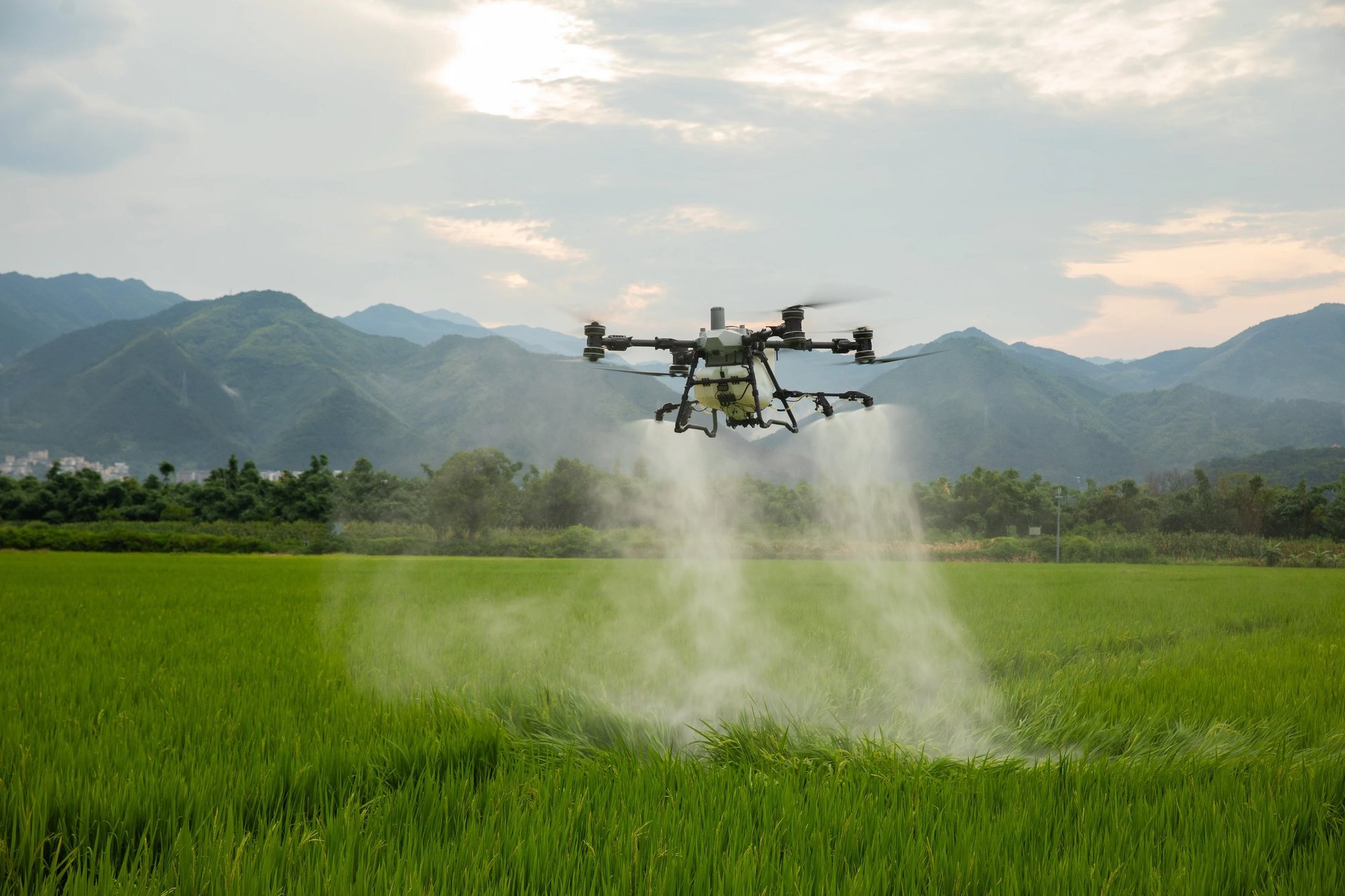
The prop wash from drone rotors forces chemical down through the canopy—not just onto the tops. This creates more complete coverage than any other method.
Drones fly at a set height, adjusting automatically for hilly terrain. They go where tractors can't and skip the compaction.
Unlike aerial applicators who follow the harvest north, we stay local. Your fields get done when you need them—not when it's convenient for a passing crop duster.
From a 7-acre hobby farm to a 2,000-acre operation. Drones handle small irregular fields that aircraft ignore—and they do it with precision.
I thought drones were a gimmick until I had my 500 acres sprayed in just a few hours. Now I can see how it's the future!
John H.
California Grower
The as-applied maps let me see exactly what was sprayed. No more guessing if the job was done right.
Maria S.
Vineyard Owner
Finally someone who shows up for my hillside almonds. The tractors can't even get in there after the winter rains.
Robert K.
Nut Farmer
Get a free consultation and let us show you how drone spraying can protect your crops without the drawbacks of traditional methods.